
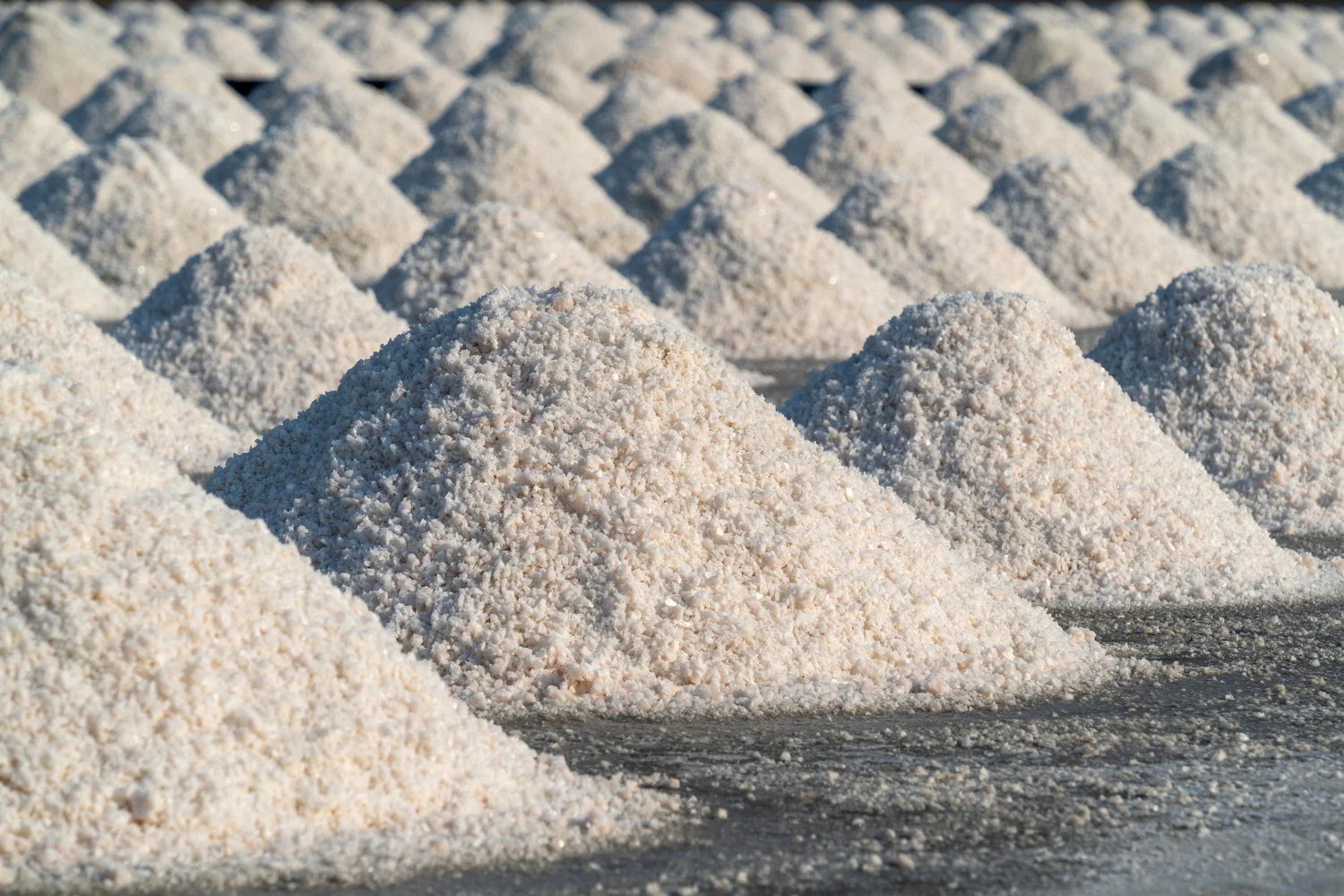
From the glass bottles we drink from to the materials that support our homes and infrastructure, minerals are the invisible ingredients of our daily lives. Silica sand, sodium carbonate, and calcium oxide continuously move through industrial supply chains before becoming essential products.
For companies importing minerals into Mexico, moving bulk cargo efficiently requires more than transportation—it demands infrastructure capable of preserving product integrity from origin to final destination.
In this article, we explain why rail transportation serves as the engine behind modern mineral logistics and how specialized terminals ensure these resources reach their destination safely and efficiently.
How does the mineral logistics chain work?
Mineral logistics requires a coordinated process designed to preserve the physical and chemical properties of materials throughout the supply chain. For companies involved in importing minerals into Mexico, every stage directly impacts operational efficiency and product quality.
This process generally consists of three key phases.
Material processing and production
It all begins at industrial plants, mines, or processing centers where minerals are refined or prepared for shipment. Depending on the material, this may involve crushing, sorting, drying, or additional chemical processes.
At this stage, maintaining quality consistency becomes essential for industries such as glass manufacturing, construction, food processing, and industrial applications.
Large-scale transportation
Once processed, the material moves toward industrial plants, distribution centers, ports, or international destinations. This is where rail transportation plays a key role.
Because mineral products typically move in large bulk volumes, rail remains one of the most efficient and cost-effective transportation methods available.
Rail enables companies importing minerals into Mexico to move substantial quantities from production sites or ports to distribution hubs while reducing transportation costs.
Mineral storage and distribution
Storage acts as a balancing point within the mineral logistics chain, allowing for final distribution prep, inventory regulation, and reduced operational interruptions.
Modern multimodal facilities integrate storage, transloading, repackaging, and distribution into a single operation, improving efficiency throughout the entire logistics process.
Why is rail transportation essential in mineral logistics?
Rail transportation remains one of the most efficient methods for long-distance bulk mineral handling. A single rail unit can move volumes that would otherwise require multiple trucks, significantly reducing the cost-per-ton-mile.
Beyond profitability, rail offers superior operational safety for critical industrial materials. By minimizing road handling, it reduces the risks of contamination and material loss—vital factors when managing high-purity chemicals or minerals.
For importers, rail transportation creates a more predictable and scalable supply chain.
Railport’s role in bulk mineral handling
At Railport, we understand that moving minerals and solid bulk products requires much more than transportation. Operations require infrastructure designed to support continuity, flexibility, and process control at every stage.
That is why we operate a specialized area dedicated to mineral logistics and bulk material handling, serving a wide range of industrial sectors.
Transloading solutions
We provide specialized infrastructure for transloading minerals and other solid bulk cargo. This process allows for the agile transfer of merchandise between different transport modes, ensuring the supply chain never stops.
Re-packaging and bagging
Every client has unique distribution needs. We provide re-packaging and bagging services from Super Sacks to smaller bags, as well as various Super Sack presentations. This versatility ensures the mineral is ready for immediate use at the plant or for retail sale.
Food-Grade Cross Docking
Purity is non-negotiable in bulk mineral handling. We utilize a food-grade conveyor belt for cross-docking operations. This equipment allows us to handle a wide variety of materials while ensuring zero cross-contamination and maintaining the highest cleanliness standards.
Proven experience with critical materials
Our operational capacity is backed by years of experience handling diverse materials that require specific care and logistics expertise:
- Silica sand and glass cullet for container manufacturing
- Calcium carbonate and sodium carbonate for industrial chemical applications
- Calcium oxide for construction and foundry industries
Every material creates unique handling, flow, and storage challenges. That is why specialized operational experience makes a measurable difference.
At Railport, we adapt every operation to the specific characteristics of your cargo.
Optimize Your Mineral Logistics Operations with Railport
Today’s industrial environment requires faster, more efficient operations capable of handling large cargo volumes without sacrificing supply chain continuity.
At Railport, we combine multimodal infrastructure, operational expertise, and specialized logistics solutions to optimize every stage of your operation.
If you are looking for a trusted partner for mineral imports into Mexico and large-scale bulk material handling, we are ready to help.
Contact Railport today and discover how we can strengthen your industrial supply chain.


